
Introduction: A Geological Masterpiece
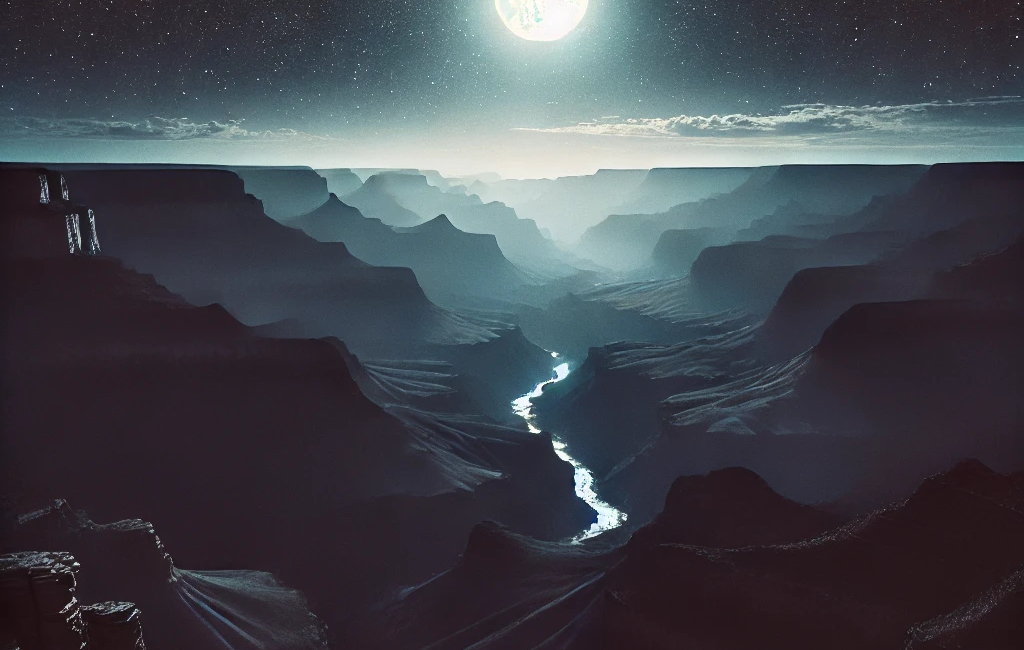
Imagine standing on the edge of a vast chasm, layers of red and gold rock stretching as far as the eye can see, with a river snaking along the distant floor like a silver ribbon. This is the Grand Canyon, one of the world’s most awe-inspiring natural wonders and a testament to the raw power of nature and the passage of time.
Carved by the Colorado River over millions of years, the Grand Canyon stretches for 277 miles (446 km) through northern Arizona. It plunges to depths of over a mile (1.6 km) and spans up to 18 miles (29 km) in width. Its colorful rock layers reveal a geological story spanning nearly two billion years of Earth’s history, making it not just a scenic marvel, but also a treasure trove for geologists and nature enthusiasts alike.
Understanding the Grand Canyon
Geological Significance
The Grand Canyon’s rock layers offer a unique window into Earth’s geological past. Each stratum represents a different era, showcasing the planet’s evolution over time. The oldest rocks at the canyon bottom, known as the Vishnu Basement Rocks, date back nearly two billion years. These ancient schists and granites tell the story of long-vanished mountains and ancient seas.
As you move up the canyon walls, you travel forward in time. The Tapeats Sandstone, for example, was formed about 545 million years ago when this area was covered by a shallow sea. The distinctive red layers near the top, part of the Supai Group, were deposited about 315-285 million years ago in a variety of environments including shallow marine, tidal flat, and coastal plain settings.
The process of the canyon’s formation is equally fascinating. While the Colorado River has been the primary sculptor, other factors like frost wedging, rain, and wind erosion have all played their part. This ongoing process continues to shape the canyon today, making it a living laboratory for geological processes.
Ecological Diversity
The Grand Canyon is not just a geological wonder; it’s also a complex and diverse ecosystem. The canyon’s varying elevations create a range of microclimates, from desert scrublands at the bottom to coniferous forests on the rims. This diversity supports an impressive array of plant and animal species, some of which are found nowhere else on Earth.
The canyon is home to over 1,500 plant species, 355 bird species, 89 mammal species, 47 reptile species, 9 amphibian species, and 17 fish species. Some notable inhabitants include:
- California Condor: Once nearly extinct, these massive birds with a 9-foot wingspan can sometimes be spotted soaring over the canyon.
- Bighorn Sheep: These agile climbers are well-adapted to the steep, rocky terrain of the canyon walls.
- Grand Canyon Pink Rattlesnake: This subspecies of rattlesnake is unique to the Grand Canyon region.
- Humpback Chub: This endangered fish species is native to the Colorado River system.
Planning Your Visit
Best Times to Visit
The Grand Canyon is open year-round, but each season offers a unique experience:
-
- Spring (March to May):
- Pros: Mild temperatures, blooming wildflowers, fewer crowds than summer.
- Cons: Can be windy, occasional late-season snowstorms on the rims.
- Insider Tip: Late April to early May is ideal for hiking, with temperatures usually perfect for outdoor activities.
- Summer (June to August):
- Pros: Long daylight hours, all facilities and services open.
- Cons: Very hot at the bottom of the canyon, large crowds, afternoon thunderstorms.
- Insider Tip: If visiting in summer, plan your hikes for early morning or evening to avoid the heat.
- Fall (September to November):
- Pros: Cooler temperatures, smaller crowds, beautiful fall colors in the forests.
- Cons: Shorter daylight hours, services start to reduce in October.
- Insider Tip: Late September to early October offers a perfect balance of good weather and thinner crowds.
- Spring (March to May):
- Winter (December to February):
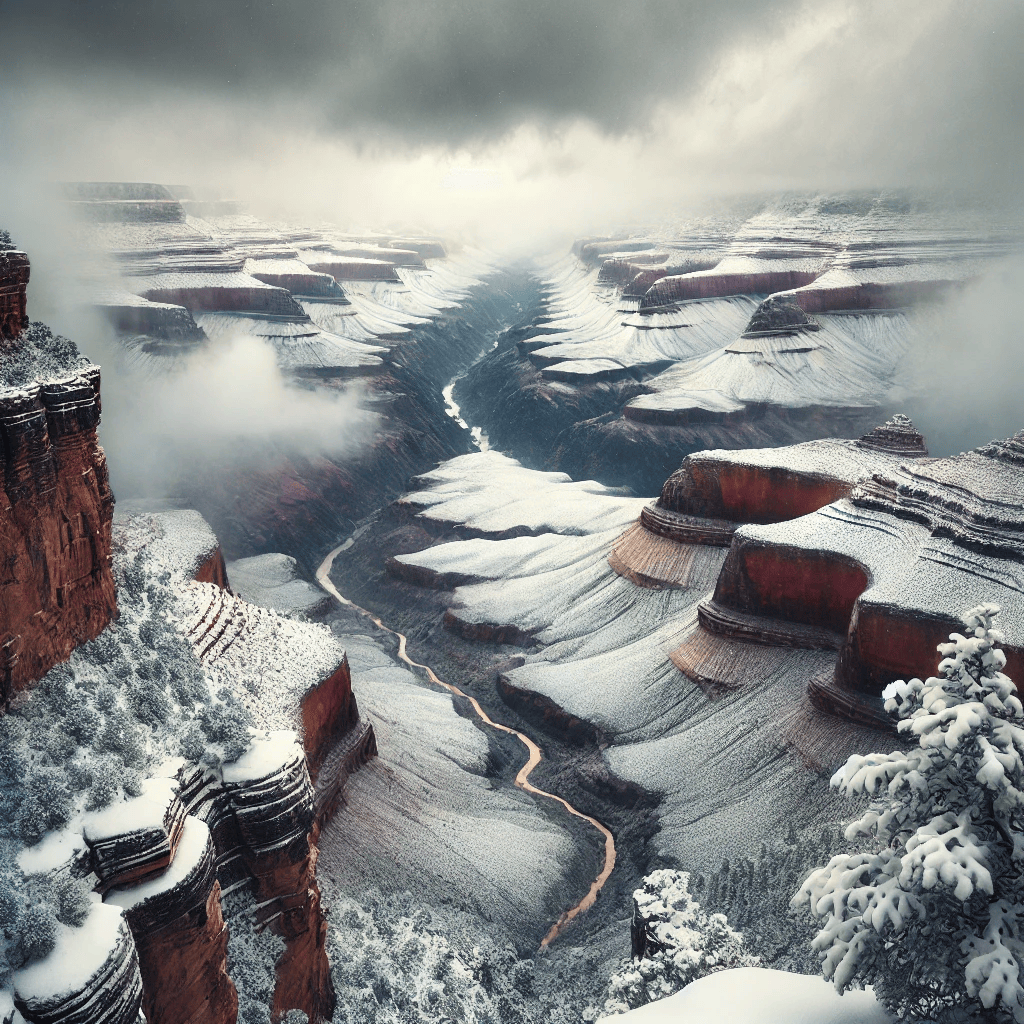
- Pros: Least crowded season, potential for snow-covered vistas, unique photography opportunities.
- Cons: Cold temperatures, potential road closures, limited services on the North Rim.
- Insider Tip: The South Rim is open year-round and can be stunningly beautiful with a dusting of snow.
Getting There
The Grand Canyon is primarily divided into the South Rim and the North Rim. The South Rim is more accessible and open year-round, while the North Rim is only open from mid-May to mid-October due to snow.
South Rim Access:
- By Car:
- From Las Vegas: About 4.5 hours (280 miles) via US-93 S and I-40 E.
- From Phoenix: About 3.5 hours (230 miles) via I-17 N and AZ-64 N.
- Insider Tip: Consider a stop at the quirky town of Williams, AZ, the “Gateway to the Grand Canyon,” on your way.
- By Plane:
- Nearest major airports: Las Vegas (LAS) and Phoenix (PHX).
- Closer regional option: Flagstaff Pulliam Airport (FLG), about 90 minutes from the South Rim.
- Insider Tip: Some tour companies offer small plane flights directly to Grand Canyon Airport (GCN), just 7 miles from the South Rim.
- By Bus or Train:
- Amtrak offers service to Flagstaff, with connecting shuttle buses to the South Rim.
- The historic Grand Canyon Railway offers a scenic ride from Williams to the South Rim.
- Insider Tip: The Grand Canyon Railway offers special themed rides, including a popular Polar Express trip during the holiday season.
North Rim Access:
- By Car: The North Rim is about a 4.5-hour drive from Las Vegas or 6.5 hours from Phoenix.
- Insider Tip: The North Rim is less developed and receives only 10% of park visitors, offering a more secluded experience.
Exploring the Grand Canyon
Must-See Viewpoints
- Mather Point (South Rim):
- Often the first stop for visitors, offering expansive views of the canyon.
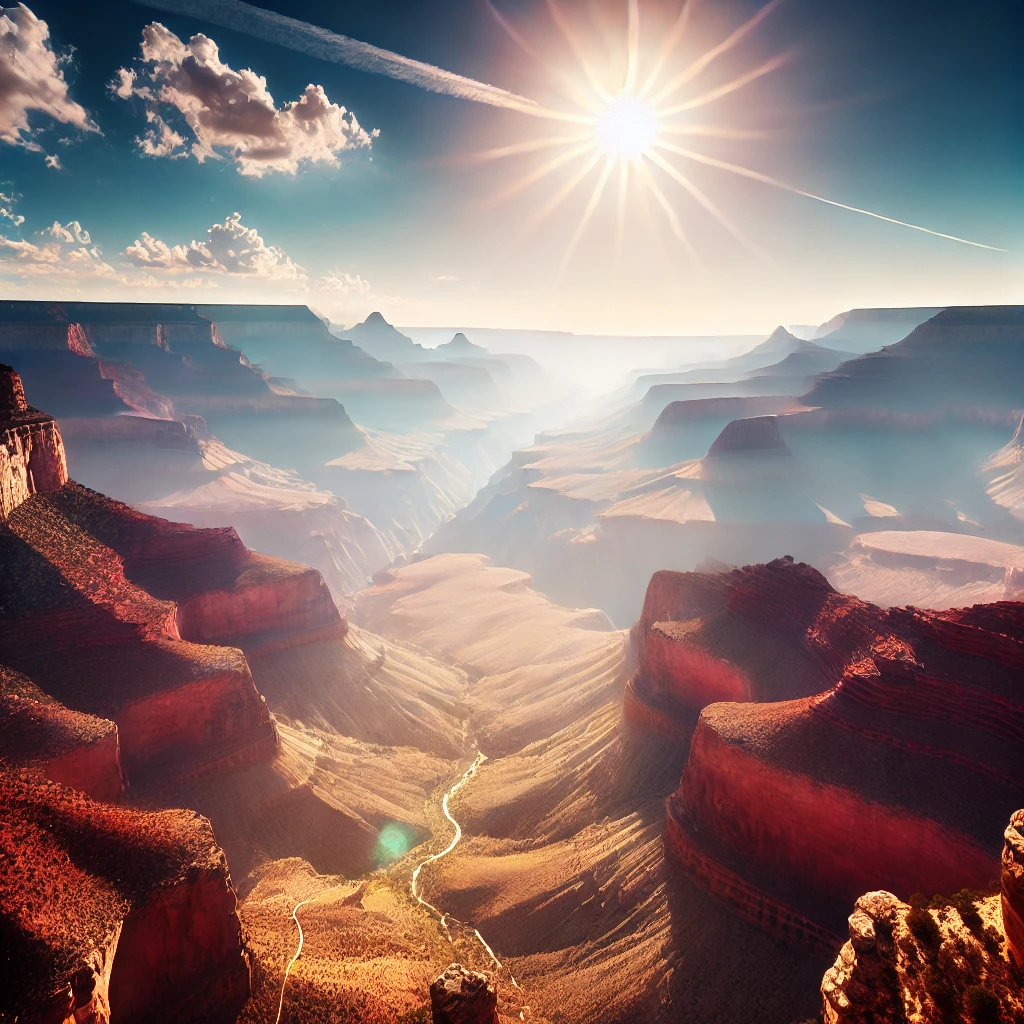
- Best Time: Sunrise, when the rising sun gradually illuminates the canyon depths.
- Insider Tip: Arrive at least 30 minutes before sunrise to secure a good spot, especially in summer.
- Yavapai Point (South Rim):
- Home to the Geology Museum and spectacular sunrise views.
- Best for: Understanding the canyon’s geological history through informative exhibits.
- Insider Tip: The large windows in the museum offer great views even on cold or rainy days.
- Desert View (South Rim):
- Features the historic Watchtower and views of the Colorado River.
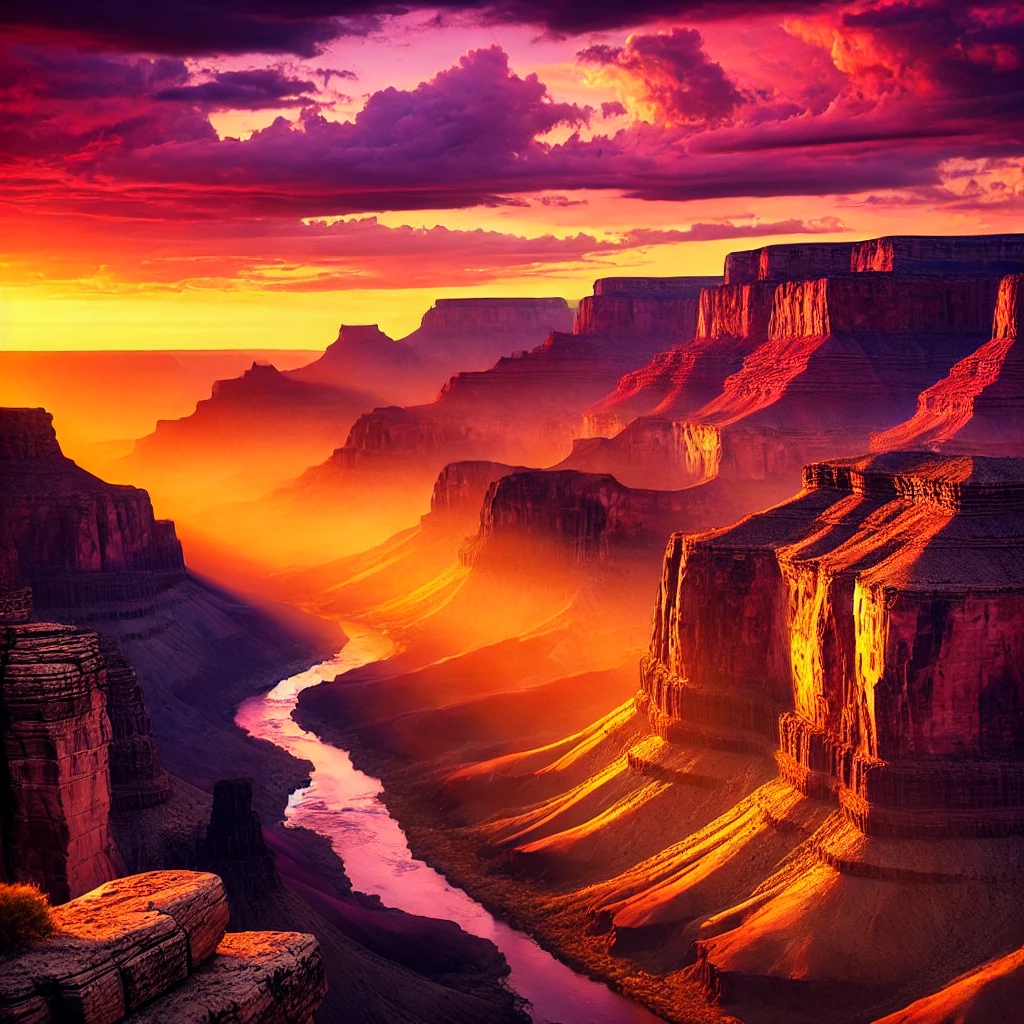
- Best Time: Late afternoon for golden light on the canyon walls.
- Insider Tip: Climb to the top of the Watchtower for 360-degree views of the canyon and painted desert beyond.
- Bright Angel Point (North Rim):
- The main viewpoint on the North Rim, offering a different perspective of the canyon.
- Best for: Seeing the layered buttes and temples of the central canyon.
- Insider Tip: The half-mile trail to the point is paved but steep in places. Take it slow and bring water.
- Toroweap Overlook (North Rim):
- A remote viewpoint with a 3,000-foot vertical drop to the Colorado River.
- Best for: Adventurous travelers seeking solitude and dramatic views.
- Insider Tip: This point is only accessible by a 61-mile unpaved road. High-clearance vehicles are recommended, and check road conditions before departing.
Hiking Trails
Hiking in the Grand Canyon offers unparalleled views and a deeper connection with this natural wonder. Here are some trails for various skill levels:
Easy Trails:
- Rim Trail (South Rim):
- Distance: Up to 13 miles one-way, but you can walk any section
- Difficulty: Easy, mostly paved and flat
- Highlights: Panoramic views of the canyon, access to many viewpoints
- Insider Tip: Use the free shuttle bus to return to your starting point
- Cape Royal Trail (North Rim):
- Distance: 0.6 miles round trip
- Difficulty: Easy, paved trail
- Highlights: Sweeping views of the canyon, natural arch
- Insider Tip: Great spot for sunset photography
Moderate Trails:
- South Kaibab Trail to Cedar Ridge (South Rim):
- Distance: 3 miles round trip
- Difficulty: Moderate, steep in places
- Highlights: Panoramic views, less crowded than Bright Angel Trail
- Insider Tip: No water available on trail, carry plenty
- Grandview Trail to Horseshoe Mesa (South Rim):
- Distance: 6 miles round trip
- Difficulty: Moderate to strenuous
- Highlights: Historic mining area, spectacular views
- Insider Tip: Trail is unmaintained in places, good hiking boots essential
Strenuous Trails:
- Bright Angel Trail to Indian Garden (South Rim):
- Distance: 9 miles round trip
- Difficulty: Strenuous
- Highlights: Shaded trail, water available seasonally
- Insider Tip: Start early to avoid afternoon heat, especially in summer
- North Kaibab Trail to Roaring Springs (North Rim):
- Distance: 9.4 miles round trip
- Difficulty: Strenuous
- Highlights: Diverse ecosystems, waterfall at turnaround point
- Insider Tip: Much less crowded than South Rim trails
- Always carry plenty of water and salty snacks. Plan on drinking 1 liter of water per hour in hot weather.
- Hike in the early morning or late afternoon to avoid the hottest part of the day.
- Remember: hiking down is optional, hiking up is mandatory. Don’t overestimate your abilities.
- Check at visitor centers for current trail conditions and weather forecasts.
Beyond Hiking: Other Activities
- Mule Rides:
- Guided trips into the canyon on mule-back, offering a unique perspective.
- Options range from 1-hour rim rides to overnight trips to Phantom Ranch.
- Book through Grand Canyon Lodges.
- Insider Tip: Book well in advance, especially for overnight trips which can fill up a year ahead.
- Rafting:
- Experience the canyon from the Colorado River, ranging from smooth water trips to whitewater adventures.
- Western River Expeditions offers various trip options.
- Insider Tip: For a taste of rafting without a long commitment, try a one-day smooth water trip from Glen Canyon Dam to Lees Ferry.
- Helicopter Tours:
- For a bird’s eye view, consider a helicopter tour with Papillon.
- Options range from 25-minute flights to longer tours with landing in the canyon.
- Insider Tip: Book an early morning flight for the best lighting and least turbulence.
Accommodation
Inside the Park
- El Tovar Hotel:
- Historic luxury lodge on the canyon rim
- Opened in 1905, it has hosted numerous celebrities and even presidents
- Insider Tip: Request a north-facing room for partial canyon views
- Bright Angel Lodge:
- Rustic accommodations with canyon views
- More affordable option right on the rim
- Insider Tip: Check out the “geologic fireplace” in the History Room, which mirrors the canyon’s rock layers
- Phantom Ranch:
- The only lodging below the canyon rim, accessible by foot, mule, or raft
- Rustic cabins and dormitories at the bottom of the canyon
- Insider Tip: Reservations are made by lottery 15 months in advance, so plan ahead!
All of these accommodations, including El Tovar Hotel, Bright Angel Lodge, and Phantom Ranch, can be found and booked through Grand Canyon Lodges.
Visit their website for detailed information, availability, and reservations for these unique lodging options inside the Grand Canyon National Park.
Outside the Park
The nearby towns of Tusayan (South Rim) and Jacob Lake (North Rim) offer additional accommodation options:
- Grand Canyon Plaza Hotel (Tusayan): Comfortable rooms just 1 mile from the park entrance
- Jacob Lake Inn (North Rim): Rustic lodge about 44 miles from the North Rim entrance
Practical Tips
- Stay Hydrated: The dry climate and physical exertion can lead to rapid dehydration. Carry and drink plenty of water.
- Start Early: Begin hikes early in the morning to avoid the midday heat and crowds.
- Check the Weather: Conditions can change rapidly, especially during summer monsoon season. Always check the forecast before hiking.
- Respect Wildlife: Do not feed or approach wild animals. Keep a safe distance and use binoculars for viewing.
- Leave No Trace: Help preserve the canyon’s beauty by packing out all trash and staying on designated trails.
- Altitude Awareness: The rim is at 7,000 feet elevation. Take it easy your first day to acclimate, especially if coming from sea level.
- Sun Protection: The sun is intense at this elevation. Wear sunscreen, a hat, and sunglasses, even in winter.
Environmental and
Cultural Considerations The Grand Canyon is not just a natural wonder, but also a place of great cultural significance to many Native American tribes. The Hopi, Navajo, Zuni, and other indigenous peoples have deep spiritual connections to the canyon.
Climate change and increased visitation pose challenges to the park’s ecosystem. Visitors can help by:
- Practicing responsible tourism and following Leave No Trace principles
- Learning about and respecting Native American cultural sites within the park
- Supporting conservation efforts through donations or volunteering
- Using shuttle buses within the park to reduce traffic and emissions
Conclusion
The Grand Canyon is more than just a big hole in the ground – it’s a place of wonder, adventure, and profound natural beauty. Whether you’re standing on the rim gazing into its depths, hiking its trails, or floating down the Colorado River, the Grand Canyon offers experiences that will stay with you for a lifetime.
Join the Conversation
Have you visited the Grand Canyon? Planning a trip? Share your experiences, tips, or questions in our North American adventures forum.
Your insights could be invaluable to fellow travelers!
And don’t forget to share your Grand Canyon photos on our community blog. Your snapshots might just inspire someone else’s grand adventure!

 (No votes yet)
 Loading...